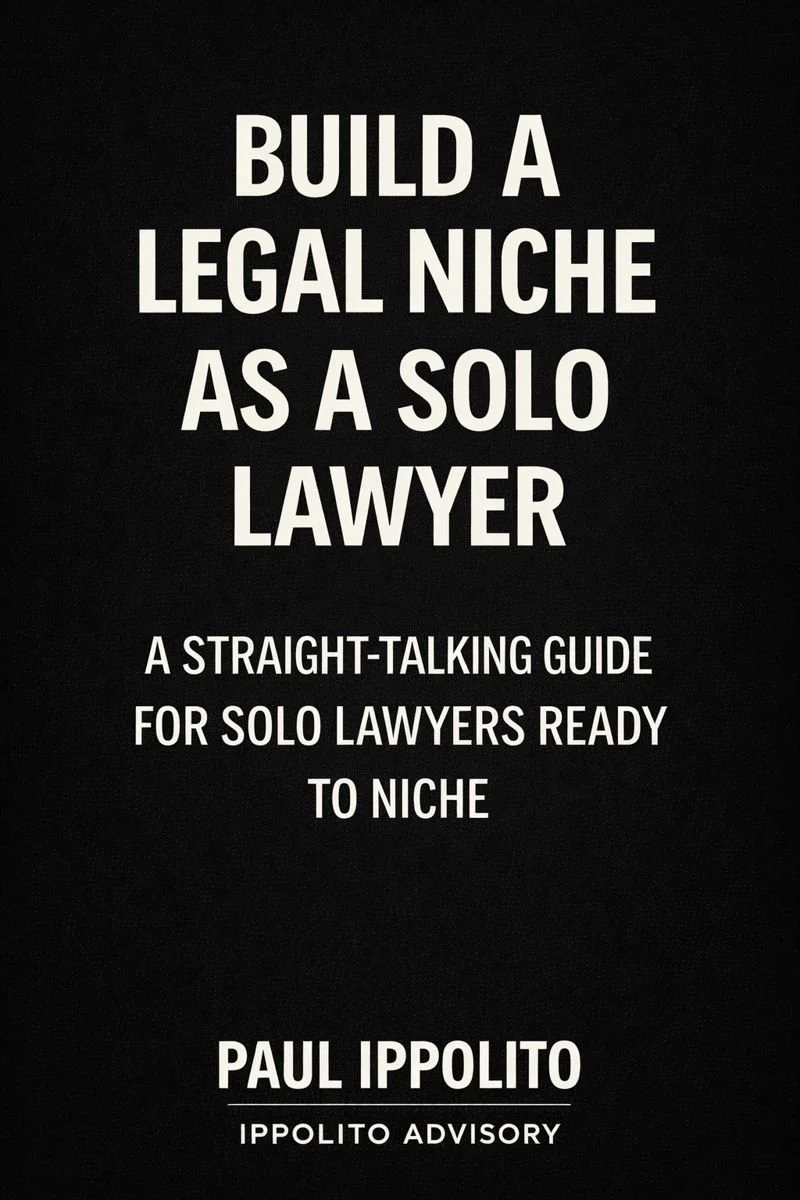
Legal Niche Guide For Solo Lawyers
A practical guide to building a legal niche from the work you already do without walking away from your current practice
Solo legal practice is changing.
The old mixed-practice model can still work for some lawyers, but it is under increasing pressure.
Routine work is being automated.
Clients are better informed before they ever speak to a lawyer.
Competition is tighter.
Being a generalist on its own is no longer much of a point of difference.
That is why niche matters.
This guide is for solo lawyers who want to move deliberately towards a stronger market position using existing experience, matters, and practice areas as the starting point
Why Niching Matters Now
For years, many solo lawyers built solid practices through general work across a mix of areas.
That model is now harder to sustain in the same way.
High-volume and routine legal work is increasingly being squeezed by technology, self-service, and AI-enabled tools.
At the same time, more lawyers are competing on the same practice areas, the same geography, and often the same fees.
Niching is not about becoming trendy.
It is a practical response to structural change.
A well-built niche can help a solo lawyer:
attract better-quality matters
stand apart from other lawyers
build stronger referrals
reduce dependence on routine work
This guide explains why niching works, when it works, and how to do it properly as a solo lawyer.
Here’s What You Will Learn
Inside the guide, we walk through:
how to identify niche opportunities already sitting inside your current practice
why you do not need to abandon your existing work to start building a niche
how to test and validate a niche before committing to it
the habits and decisions that build genuine niche expertise over time
how a niche can help protect a solo practice from growing pressure on routine legal work
This guide is written specifically for solicitors, barristers, and independent consultant lawyers.
Who This Guide Is For
This guide is for solo lawyers who:
are tired of competing as just another generalist
are uneasy about where routine legal work is heading
want to attract better work, not just more work
want a clearer strategic position in the market
want to build a practice that is more durable, more focused, and harder to ignore
Niching takes time.
This guide will help you work out where to focus and what to do next.
What You Are Buying
You are buying a practical guide that helps you think clearly about legal niche strategy as a solo lawyer.
It is designed to help you:
assess where your current practice already points towards a niche
avoid common mistakes in choosing or forcing a niche
make deliberate decisions instead of vague ones
start building position before the market makes the decision for you
At $99 AUD, this is for lawyers who want a serious starting point and a workable framework.
About The Author
Paul Ippolito wrote this guide based on lived experience.
He still practises and runs a solo law firm. He also still teach and has advised solo lawyers on niche and practice strategy across different stages of practice.
Paul has also niched several times myself, both inside and outside law.
This guide reflects what has worked in real practice.
Not Ready To Commit To A Niche Yet?
If you’re unsure whether niching is the right move for your practice right now, start here:
Take The “Are You Ready to Niche?” Self-Assessment
It takes about 3 minutes and helps you understand:
how exposed your practice may be,
whether niching is urgent for you, and
what your next step should be.
Take a look also at our Legal Niching Action Checklist, a standalone, practical tool that shows you exactly what to do - step by step.
Want To Work Through It Properly?
Niching is a strategic decision with important consequences.
A private strategy session is designed to work through that properly.
Book A Strategy Session
Niching takes time but waiting until the market forces the issue usually costs more.